
How To Break The Vicious Circle Of Emotional Eating
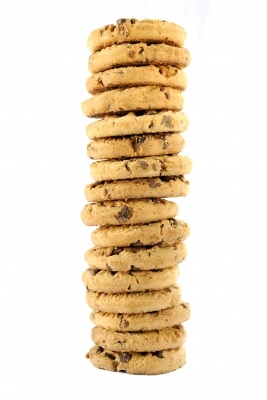
 Do you ever find comfort in food when you know you shouldn’t?
One of our readers recently requested we write an article covering this topic, so here it is…
Our body needs food to live. But food is much more than a fuel. It’s linked to traditions, celebrations, pleasure and a whole bunch of other feelings – not always so pleasant.
A pack of chocolates or sweets when things get tough at work?
A tub of ice cream in front of the telly when you’re feeling lonely or sad or rejected?
Emotional eating can take different shapes and forms but it’s all about alleviating negative feelings (be it stress, unhappiness, loneliness, disappointment in others and self,…) through pleasant comforting food.
Does emotional eating work?
Yes… maybe the first time, but (you knew a BUT was coming, didn’t you?) should emotional eating become a habit, you then hit all the problems that come with absorbing excessive quantities of sugar. Because that’s mostly what emotional eating comes down to: gorging yourself with sugar that your body simply does not need and is forced to cope with.
How Does Your Body Cope With Excess Sugar?
The body always strives to achieve a steady supply of glucose (needed to provide energy to cells). So, when your blood sugar levels increase after a meal, the hormone insulin is released in order to transform the extra blood sugar into glycogen which can be stored in the liver. Later, if blood sugar becomes too low, another hormone (glucagon) will cause the exact opposite to happen.
Now, imagine you’re eating a whole pack of candies (pure sugar!) as a snack. Your blood glucose levels are going to rise very fast. Insulin will cause the excess to be stored in your liver. But, here comes the problem, the space there is not infinite. The liver has a maximum glycogen storage capacity of approximately 87 to 100 grams. Providing additional glucose to cells when glycogen stores are saturated leads to the excess being stored as … fat (in both muscle and fat cells).
How The Vicious Circle Of Emotional Eating Sets In
Coping with excess sugar for the body means storing it, first in the liver and then, when there’s no more space there, in the fat layers. After a series of ‘comforting’ food sessions, you get yourself another problem on top of whatever you started emotional eating for: excess weight and negative personal image. Sometimes, that, in itself, fuels more emotional eating … a real vicious circle.
It is a vicious circle in more than one way actually. Simply because, with excessive sugar intake, you could develop a common condition called reactive hypoglycaemia. The tissues become resistant to insulin so the pancreas has to make more of it to bring blood sugar down. You end up with low blood sugar and then urgently crave carbohydrates because more sugar is needed to create energy. Highs and lows of blood sugar will be experienced. Typical symptoms include fatigue, mood swings, inability to cope with stress, poor concentration and poor memory.
What started as an emotional eating problem has now become physically self-perpetuating because of:
- Experiencing real sweet cravings due to blood sugar lows where you will be driven to consume comforting food exactly as you would in the case of emotional eating (even though it’s not strictly caused by emotions but a physical need)
- Increasing stress and mood swings caused by the blood sugar imbalance, which again could lead to emotional eating
- Increased weight, which could here again lead to more emotional eating
No point going on about it, if you’re reading these lines and are suffering from emotional eating, all you probably want to know now is: How do I break this habit?
How To Break The Vicious Circle Of Emotional Eating
Here is some practical advice to help you achieve just that:
1. Identify your trigger
In other words, what compels you to emotional eating?
Think of the last time it happened. What lead you to it?
What had happened just before?
Is it always the same thing?
Are there several causes?
If it helps, hold a diary for a week and record every food and drink intake. All you need is 7 columns:
- date
- time
- what you eat and drink
- quantity
- how hungry/thirsty you were before you ate/drank (from 0: not at all to 9: extremely)
- what was your mood before eating
- how did you feel afterwards
Be honest and try and not to change your habits to ‘look’ good in this diary. You’d be missing the point entirely.
Once you’ve done your diary for a week, sit down and analyze it.
How often do you eat without being hungry?
What emotions do you feel prior to eating?
Afterwards?
Is there a pattern emerging?
2. Take Action
Once you know your emotional eating pattern better, I suggest acting on both the physical and emotional level at once:
a. MENTALLY: Fight off your emotional eating with the Break Habit exercise
Let’s say the trigger of you emotional eating is stress. Every time you feel stressed, you buy and eat a pack of sweets. Subconsciously you’ve associated the candies with tasting good and making you feel better. We need to break this association in your mind so the feeling you have towards sweet snacks change and you can break this habit.
Follow this method step by step, starting with step 1 now and steps 2-3 during the week:
- Associate sweet snacks with bad vivid representations, the worst associations the better (for example think of those snacks as excess sugar that will turn into fat and will be stored in your fat cells on your bottom, your belly, your hips / associate to them a smell that you find particularly vile, a taste that disgusts you). Use whichever associations work best for you until your feelings towards sweet snacks change.
- During the week, as and when you feel stressed or sad and you yearn for sweet snacks, increase the sensation of loathing towards sweet snacks. Intensify it. Make it feel 100 times so that you do not pick the sweet snack.
- Once this is done and you’ve managed to stop yourself from eating the sweet snack, internalize the fact that you have changed. Endorse this new habit. The more you practice it, the more it will become easier. See yourself in a different way. This person who used to eat sweet snacks when stressed or sad is not you anymore.
If it helps, drink water, have a fruit, a cup of tea instead of the sweet snack but do vary the replacements. We don’t want to replace the habit of sweet snacking with coffee drinking for instance!
It can help to use your food diary to record any sweet craving avoided (and what you replaced them with if you did).
b. PHYSICALLY: Change your overall diet to reduce the high-low blood sugar roller-coaster.
What you want is a regular flow of blood sugar so you don’t have these cravings that can be mistaken for emotional eating.
Follow these simple rules:
- NEVER miss breakfast
- Drink a lot of water (carry your bottle around with you)
- Eat SMALL amounts regularly (at least 5 times a day) AS SOON AS you feel a little hungry (do not wait to be really hungry or you’ll over-eat)
- Include ALL 3 macro-nutrients (carbs –brown if possible and fruits and vegetables-, protein, fat) at EACH meal/snack (fat and protein will slow down the absorption of sugar)
For some people at this point, it might just be easier to decide to avoid sugar altogether for a while – go cold-turkey. That’s not a good solution for everyone. I, for one, like things in moderation. But, for some people, it’s the only way to do it. And, it presents an added advantage, that of retraining your taste buds. After a while without simple sugar, you’ll rediscover the natural sweetness of fruits, vegetables, milk,…
3. Deal With The Source Of The Problem
Finally, although not necessary to stop emotional eating, it might be useful that you find out the reason why emotional eating started and took hold. Use the following exercise to explore the root problem of your emotional eating.
Find a quiet place and pick a moment where you won’t be disturbed.
- Think of your emotional eating and record your feelings.
- Do not allow your conscious mind to intervene.
- Allow yourself to form a feeling for ‘all of that situation’. Identify it with a word, an image or a phrase that seems to completely cover the quality of it.
- Now ask what it is about the whole problem that makes this quality.
- What makes this problem feel the way it does?
- Allow the obvious conscious responses to pass by and continue to try to get to the bottom of the complete quality of your feeling.
- Stay with this until an answer comes along that is accompanied with a distinct feeling of a shift or a release of some kind.
- You will now have a new feeling with which you can repeat the process again until the root cause is identified.
If this exercise does not work the first time, don’t worry. Try again another day.
This exercise might unleash emotions you didn’t expect but it can be the start of a new direction in your life.
To further help you identify what is not working in your life and for practical advice to start working on it, see our Be Your Own Life Coach section.
If you suffer from emotional eating, try out our advice and let us know how it worked for you.
I don’t know if this helps but when i feel like eating because i’m bored, stressed or emotional, i sometimes cook something savory for me and the family. Something that takes me a long time to cook. Then when i sit down i feel like eating slowly and savoring it. I think the cooking releases stress plus if it took me a long time to make than i feel like i want to savor every bite.
I know this may seem hard for some people but if you don’t have processed snacks in the house and only have fruits, veggies, nuts, yogurt than you are less likely to gorge on food when you are emotionally stressed or depressed.
Hi Annie,
By the sound of it, you have a very healthy relationship with food:
– savoury food
– enjoying cooking
– cooking for the family and not just yourself
– savouring the food you’ve prepared
That’s brilliant and something to aspire to. I especially love the fact that, for you, cooking is stress-relieving. I think that’s the key point. If you can manage to relieve stress through something else than over-eating food (it doesn’t have to be cooking – sport, relaxation, …), you can regain that healthy reationship with food.
Thanks for your comment and take care
Isabelle
Hi Isabelle,
I can relate to this topic because I am an emotional eater. What sets me apart though I believe is that it has to take something drastically horrible to happen in my life for this to kick in. For instance, I’ve only implemented this three times in my life.
1. When I got divorced.
2. When I knew I would never have children.
3. When my Dad passed away.
The odd thing is that when I got divorced I actually went the opposite way. I didn’t eat and I lost like 20 pounds. The other two instances I gained about 30 pounds each time because the pain was too great. Forcing myself to take other measures was not even in my path.
I did get the weight back off each time so stress and just being upset doesn’t trigger this for me. It has to be something major so I’m just blessed that it hasn’t happened more often.
Great post though and good suggestions. Glad to know people suggested this topic because I know it affects a lot of people.
~Adrienne
Hi Adrienne,
Thank you so much for your comment and sharing your experience.
I completely understand the not eating reaction. That’s how I get affected too. That’s what happened to me when my fiance broke our engagement, I lost my grand-dad and my cat – all in the space of 3 months. My world fell apart. I just didn’t have appetite for anything. It took some time to rebuild my confidence and start loving life and food again. Then, of course, the weight came back -a bit more than I’d lost- but, by then, I’d found love again and I was happy in my body.
I’m very impressed that you managed to lose the 30 pounds you’d put on twice. Well done for that! Was it hard?
Best wishes
Isabelle
I’m so sorry to hear that it’s happened to you as well Isabelle. Not a good feeling is it.
Wow, all three events within a three month period. That had to be so hard and my heart goes out to you. I would have been over the edge girl. Life sure can be challenging at times can’t it?
When I put my mind to something, no one can stop me. After I finally got through all the pain and was unhappy with myself for having gained all that weight, I made the decision to take it back off. I just cut back on what I ate and it was gone in no time at all. I’m very focused when I put my mind to something. I just don’t want to be overweight.
Thank you very much for writing this article I am going to do exactly what it says and I will report back in a while to let you know what my progress is. It feels lovely that you wrote this in response to my request.
Thank you again x
You’re very welcome. Good luck with it and please do let us know how it went.
Hi Debbie,
as Isabelle says, you’re most welcome & thanks for your feedback. In case you haven’t already then you might want to consider joining our email list (see the bottom of the page), that way not only will you get a great free e-book (it’s quite comprehensive) but you will then be able to respond to any of the emails you get in case you’d rather ask questions that way (otherwise feel free to just continue using the comments section).
In any case I hope the above advice helps in some way and best wishes,
Alan